
Slide 1 · Understanding Velocity and DisplacementOpening · 12 min
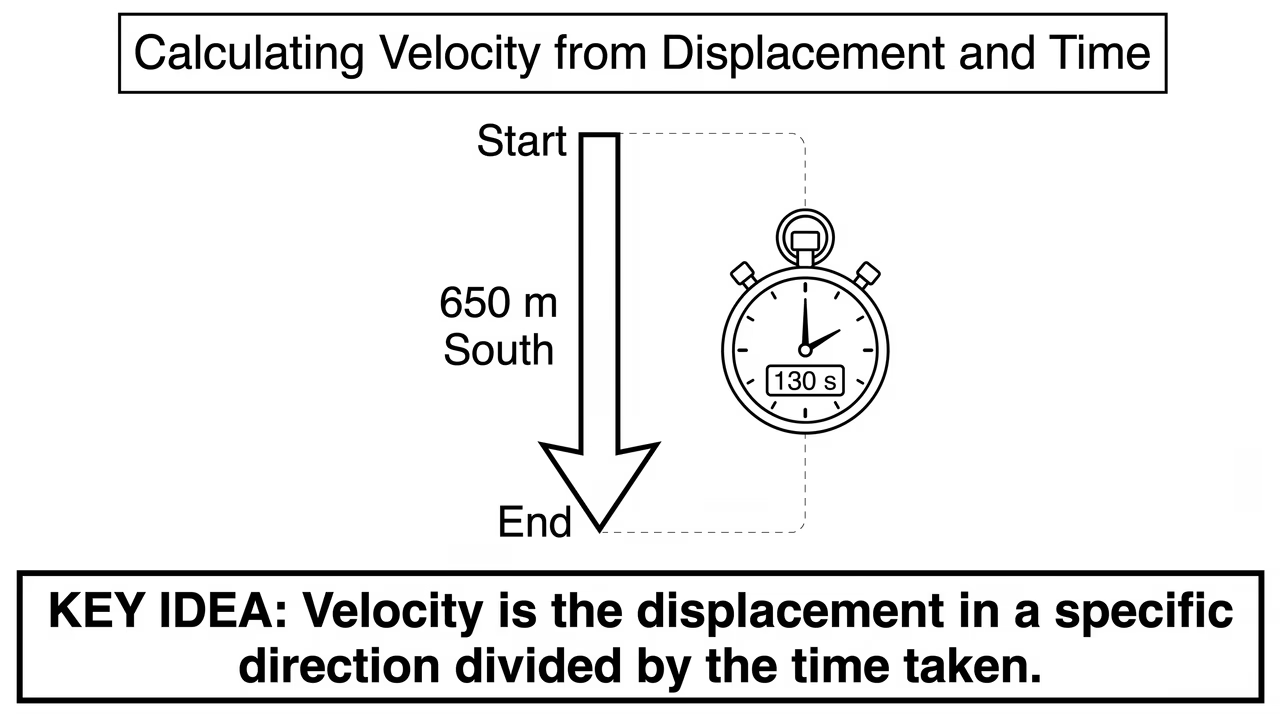
Velocity measures how fast an object moves in a given direction. Unlike speed, which only considers total distance, velocity depends on displacement, which is the straight distance towards a specific direction. To determine velocity, we calculate the ratio of displacement to time duration. For instance, measuring a distance of 120 metres along a direct easterly path across school grounds and measuring duration allows us to calculate the learner's precise velocity in metres per second. Use Figure 1 to see how to represent displacement and time for your calculations.
- Velocity is defined as the ratio of displacement to time in a specified direction.
- Displacement measures the straight-line distance and direction from the starting point.
- The SI unit for measuring velocity is metres per second, written as m/s.
- Dividing straight line displacement by total elapsed time yields average velocity.
Worked example. Identify displacement: . Identify duration: . Apply the velocity formula: . Calculate: . Answer: .
Check question: An athlete runs along a straight track measuring due East in . What is the athlete's velocity?
Show answer
. Velocity is displacement divided by time, so .
