Slide 1 · Counting and Measuring Use Real NumbersOpening · 18 min

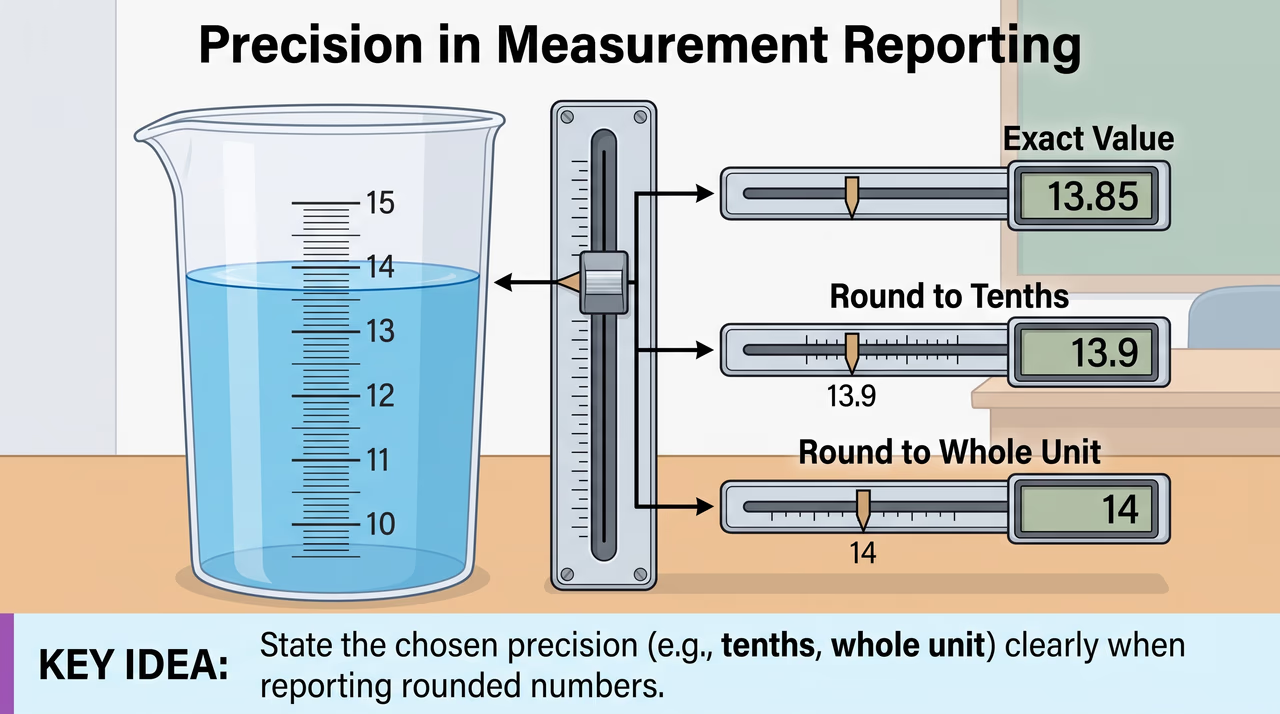
Whole numbers count objects, while fractions and decimals describe portions, lengths, masses, and time. Together these real numbers let people communicate quantities more precisely than words alone. See Figure 1 for examples of whole numbers used to count and decimals used to measure.
- Choose whole numbers for complete counted objects.
- Use fractions or decimals for measured portions.
- Attach a unit whenever a quantity is measured.
- Precision should match the decision being made.
Worked example. The amount includes a half litre, so a whole number would lose information. Use two point five with unit litres. Explain that the decimal records a measured portion. Answer: Use two point five litres because the quantity is not a whole number..
Check question: Why is a unit required after writing for a measurement?
- It gives the dimension and meaning of the quantity being measured.
- It determines the number of decimal places needed for the measurement.
- It changes a counted whole number into a measured decimal portion.
- It shows whether the measurement is an exact or a rounded value.
Show answer
It gives the dimension and meaning of the quantity being measured. Without a unit, provides only a magnitude. A unit gives the number practical meaning by stating whether it represents litres, metres, kilograms, or another measure.